Published October 26, 2026 · Prime AC & Heat
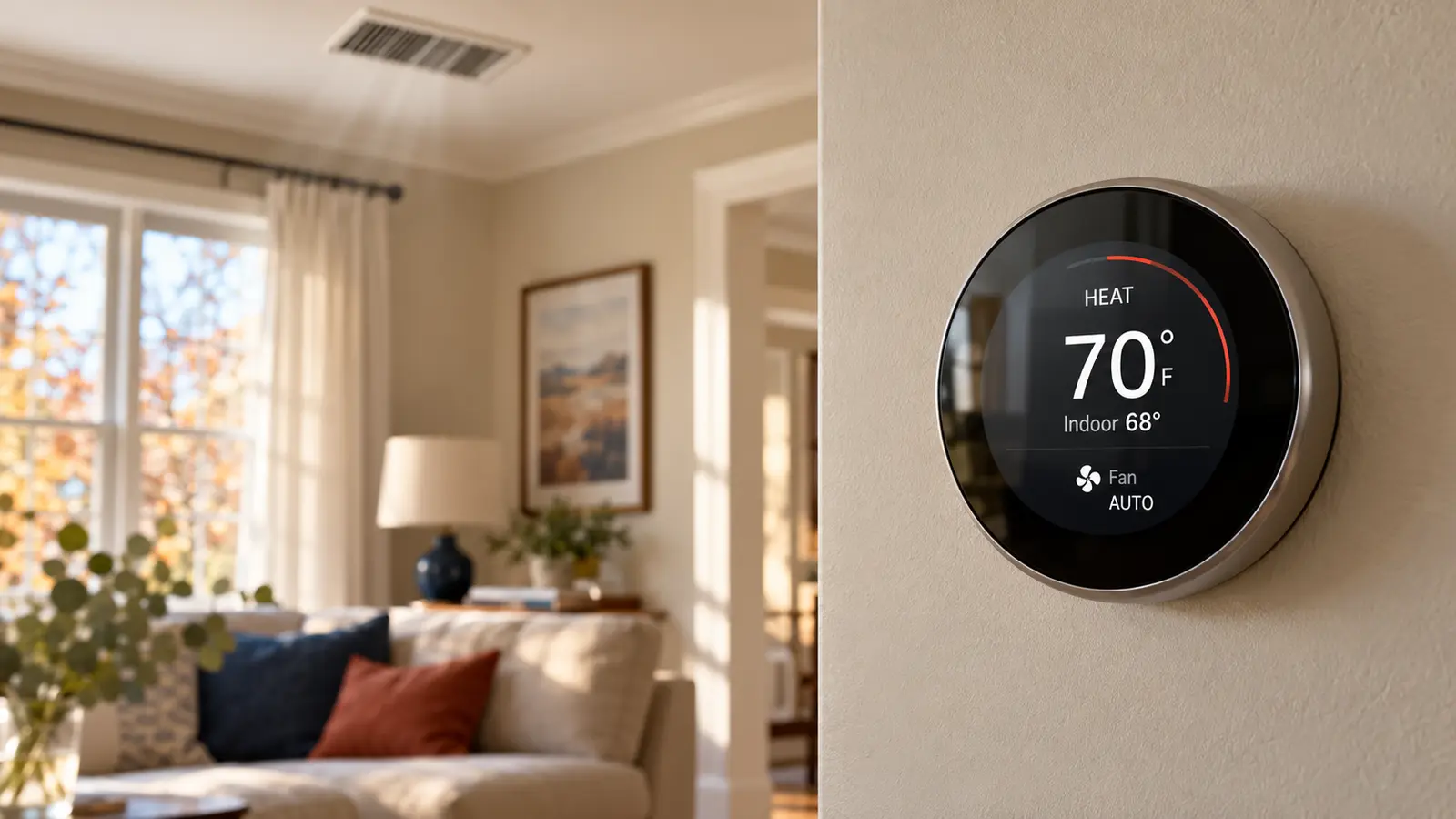
For most DFW homes, FAN AUTO is the best starting point. AUTO normally runs the indoor blower when the heating or cooling system calls for it. FAN ON keeps the blower moving air between those calls. ON does not create extra heat or cooling, and it is not a repair for weak airflow or a home that is not reaching the thermostat setting.
Cover image: AI-generated editorial artwork. It does not show an actual Prime customer, employee, installation or service visit.
The Fan Setting Is Separate From HEAT or COOL
The system mode tells the equipment whether you want heating, cooling or no temperature change. The fan control tells the indoor blower when to move air. That is why a thermostat can show HEAT and FAN ON at the same time: the blower may continue circulating room-temperature air after the active heating cycle ends.
With FAN AUTO, the blower follows the system's normal control sequence. Many systems also include a short built-in delay, a Circulate option or low-speed logic. Do not treat one display label as proof that something is wrong; note what the thermostat says and whether the home is moving toward the setpoint.
Why AUTO Is Usually the Practical Default
Department of Energy guidance recommends AUTO rather than continuous ON operation for typical central systems, and current Building America heat-pump guidance says to begin with Auto Fan unless the equipment instructions call for another setting. The practical benefit is that the blower is not forced to run continuously when there is no heating or cooling call. Department of Energy HVAC guide — reviewed October 26, 2026 Building America heat-pump maintenance guidance — reviewed October 26, 2026
AUTO can also make the operating pattern easier to understand. If air moves only during a heating or cooling call, you can more clearly compare the thermostat setting, the indoor temperature and the system's response.
When FAN ON or Circulate May Be Useful
Continuous or scheduled circulation can help mix air between rooms in some homes. It may also support an equipment-specific filtration, ventilation or air-quality strategy. But the right choice depends on the blower, controls, filter, duct system and any dehumidifier or ventilation equipment tied into it.
Use FAN ON as an intentional setting, not as a way to force a temperature change. If your thermostat offers Circulate, follow its instructions. If a technician configured special fan operation for your system, ask before overriding it. Variable-speed and communicating systems may manage airflow differently from a basic single-speed furnace or air handler.
Five Safe Checks When the Fan Seems To Run Constantly
- Confirm the thermostat shows the intended system mode and whether the fan is set to AUTO, ON or Circulate.
- Check for a schedule, hold or circulation program that may be requesting fan operation.
- Look at the accessible filter and confirm that return grilles and supply registers are not blocked. Use only the filter type and access point intended for the homeowner.
- Record the setpoint, displayed indoor temperature and whether the home is actually heating or cooling.
- Write down any alert, unusual noise, weak airflow, repeated shutdown or breaker issue. Do not open equipment panels or bypass controls.
DFW Fall Weather Can Make the Pattern More Noticeable
North Texas can still have warm afternoons while mornings feel cooler. The National Weather Service forecast for Lewisville issued October 26, 2026 called for highs around 81–84°F through midweek, with overnight lows in the low-to-mid 60s. During weather like that, choose one intentional system mode and fan setting instead of repeatedly switching controls to chase every short temperature change. National Weather Service Lewisville forecast — issued October 26, 2026
When To Request Service
Request a diagnostic if the fan keeps running after you select AUTO and the normal cycle should be over, if the system will not heat or cool toward the setpoint, or if airflow becomes unusually weak. A new persistent electrical or burning odor, smoke, sparking or a repeatedly tripping breaker is not a thermostat experiment: stop using the affected system and seek qualified help. Follow emergency instructions for fire, a gas leak or a carbon-monoxide alarm.
Prime AC & Heat serves owner-occupied single-family homes in Lewisville and across North DFW. Share the thermostat mode, fan setting, setpoint, indoor temperature and the pattern you observed. Prime can help you choose the appropriate next step without asking you to diagnose a part. Review the fall and winter comfort guide Request heating repair Explore indoor air quality options Contact Prime AC & Heat
Sources And Further Reading
Reviewed October 26, 2026. General guidance does not replace the instructions for your thermostat and HVAC equipment or an on-site diagnosis. ENERGY STAR heating and cooling maintenance checklist ENERGY STAR smart thermostats
For advice about your current system or a new installation, contact Prime AC & Heat. Equipment requirements and program availability can change over time.